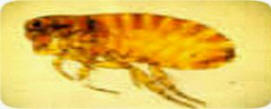
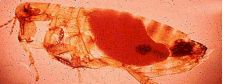
- Normally after a blood meal, the female flea lays about 15 to 20
eggs per day up to 600 in a lifetime usually on the host
 (dogs, cats,
rats, rabbits, mice, squirrels, chipmunks, raccoons, opossums, foxes,
chickens, humans, etc.). Eggs loosely laid in the hair coat, drop out
most anywhere especially where the host rests, sleeps or nests (rugs,
carpets, upholstered furniture, cat or dog boxes, kennels, sand boxes,
etc.). Eggs hatch in two days to two weeks into larvae found indoors in
floor cracks & crevices, along baseboards, under rug edges and in
furniture or beds. Outdoor development occurs in sandy gravel soils
(moist sand boxes, dirt crawlspace under the house, under shrubs, etc.)
where the pet may rest.
(dogs, cats,
rats, rabbits, mice, squirrels, chipmunks, raccoons, opossums, foxes,
chickens, humans, etc.). Eggs loosely laid in the hair coat, drop out
most anywhere especially where the host rests, sleeps or nests (rugs,
carpets, upholstered furniture, cat or dog boxes, kennels, sand boxes,
etc.). Eggs hatch in two days to two weeks into larvae found indoors in
floor cracks & crevices, along baseboards, under rug edges and in
furniture or beds. Outdoor development occurs in sandy gravel soils
(moist sand boxes, dirt crawlspace under the house, under shrubs, etc.)
where the pet may rest. - Larvae are blind, avoid light, pass through three larval instars and take a week to several months to develop. Their food consists of digested blood from adult flea faeces, dead skin, hair, feathers, and other organic debris. Sleep. Pupa mature to adulthood within a silken cocoon woven by the larva to which pet hair, carpet fiber, dust, grass cuttings and other debris adheres. In about five to fourteen days, adult fleas emerge or may remain resting in the cocoon until the detection of vibration (pet and people movement), pressure (host animal lying down on them), heat, noise, or carbon dioxide (meaning a potential blood source is near).
- Adult fleas cannot survive or lay eggs without a blood meal, but may live from two months to one year without feeding. There is often a desperate need for flea control after a family has returned from a long vacation
- Bubonic plague: enlarged, tender lymph nodes, fever, chills and prostration
- Septicaemia plague: fever, chills, prostration, abdominal pain, shock and bleeding into skin and other organs
- Pneumonic plague: fever, chills, cough and difficulty breathing; rapid shock and death if not treated early
Trim lawns and weeds to create a drier, less-ideal
environment for flea larvae. Avoid piles of sand and gravel around the
home for long periods of time. Fence yards to prevent dogs from roaming freely in
heavily infested areas or contacting other infested animals. Discourage
nesting or roosting of rodents and birds on or near the premises. Screen
or seal vents, chimneys, crevices, etc. where rats, mice, squirrels,
raccoons, chipmunks, etc. may use to enter crawlspaces and buildings.
Wash or destroy pet bedding, regularly groom pets and vacuum frequently
to remove up to 95 percent of the flea eggs, some larvae and adults.
Only about 20 percent of the larvae might be removed when vacuuming
since they wrap themselves around the bottom strands of carpeting.
long periods of time. Fence yards to prevent dogs from roaming freely in
heavily infested areas or contacting other infested animals. Discourage
nesting or roosting of rodents and birds on or near the premises. Screen
or seal vents, chimneys, crevices, etc. where rats, mice, squirrels,
raccoons, chipmunks, etc. may use to enter crawlspaces and buildings.
Wash or destroy pet bedding, regularly groom pets and vacuum frequently
to remove up to 95 percent of the flea eggs, some larvae and adults.
Only about 20 percent of the larvae might be removed when vacuuming
since they wrap themselves around the bottom strands of carpeting.